


Clean lab virtual tours
Take a tour of the Instrument room that houses our Nu Plasma HR MC-ICPMS and Agilent 8900 ICPMS:
 ►
Explore 3D Space
Or tour our Picotrace Metal free Clean Lab:
 ►
Explore 3D Space
Goldschmidt 2026
by karrie on July 12, 2026 5:31 am
Congrats to the SIGMA lab members that are presenting at the Goldschmidt Geochemistry Conference 2026 this year.
Warning: Undefined variable $raw_excerpt in /home/sigmalab/sigmalab.stanford.edu/wp-content/themes/lagunita-theme/Lagunita.php on line 2123
Contaminant concentrations in biological materials
by karrie on March 6, 2024 5:36 pm
Toxic metals, such as As and Cd, can be found in low concentrations in biological tissue. One of the challenges faced while determining toxic metals concentrations is pairing reliable digestion methods to liquefy solid tissue with low instrument detection limits. Using the Agilent 8900 QQQ with O2 as a reaction gas we can simultaneously accurately… Read more Contaminant concentrations in biological materials

Laser ablation concentration determinations in silicates
by karrie on March 6, 2024 2:52 pm
Laser ablation characterization of trace elements in mineral separates.

Nanoparticle size distribution analysis
by karrie on March 6, 2024 1:14 pm
The Agilent 8900 is capable of determining the size distribution of nanoparticles in solution.

Transition metal concentrations in small biological samples
by karrie on March 5, 2024 6:55 pm
Samples prepared in the metal-free clean lab and analyzed on the triple quadrupole ICP-MS can lead to the detection of <1 ng of transition metal in 5 mg of sample.

Laser elemental concentration mapping in carbonates
by karrie on December 3, 2023 6:04 pm
In-situ composition determinations of trace elements in naturally occurring carbonates
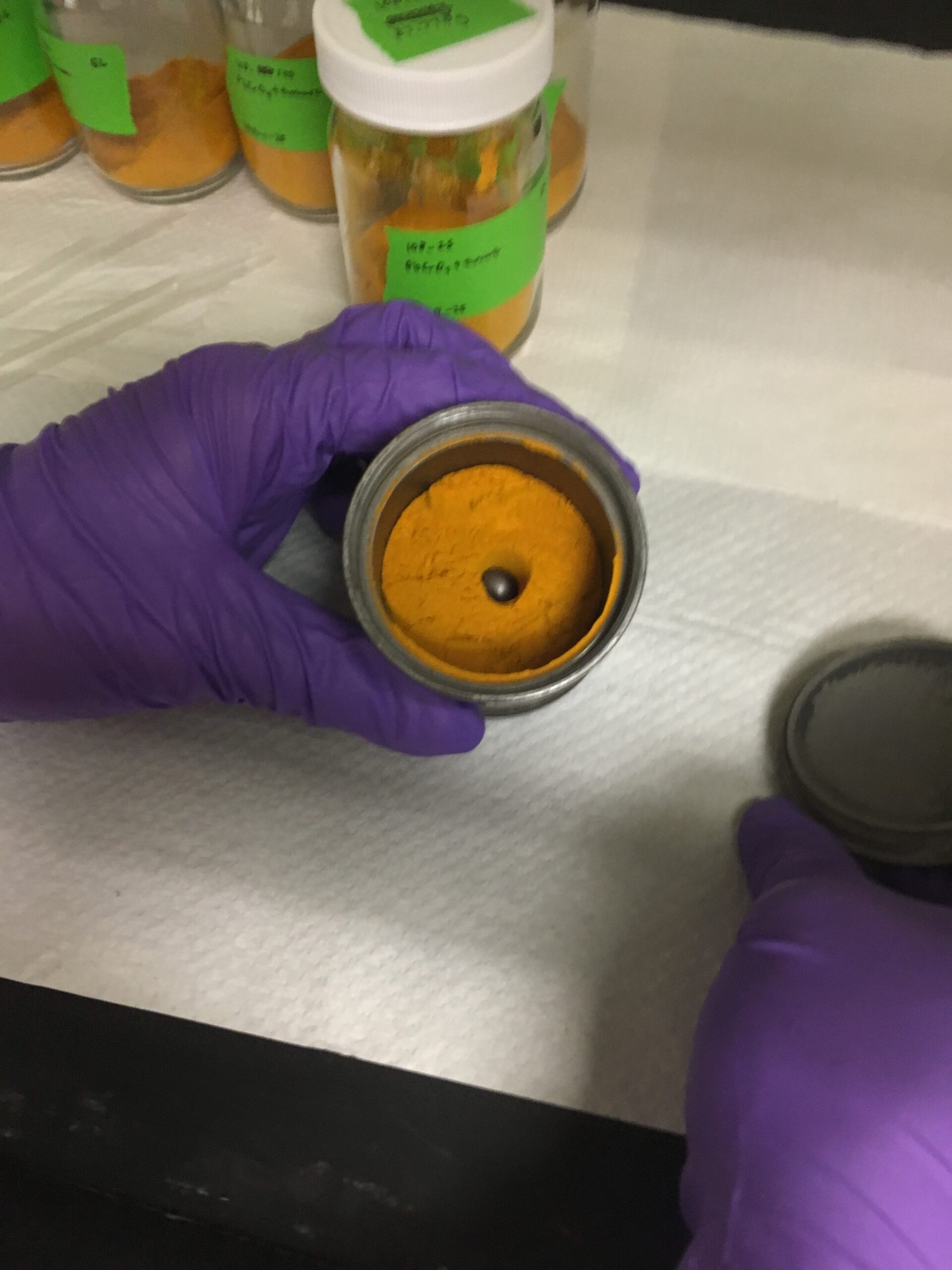
Turmeric's unexpected link to lead poisoning in Bangladesh
by karrie on June 14, 2023 6:00 pm
Stanford Medicine Magazine highlights the work of Dr. Jenna Forsyth and Dr. Steve Luby. Their work identified lead-contaminated spices in Bangledesh with the help of measurements made in the SIGMA Facility.
Fingerprinting Lead in Bangladesh Turmeric
by karrie on September 25, 2019 12:29 pm
Some spice processors in Bangladesh use an industrial lead chromate pigment to imbue turmeric with a bright yellow color prized for curries and other traditional dishes, elevating blood lead levels in Bangladeshis. Read more in the Stanford Report.
Warning: Undefined variable $raw_excerpt in /home/sigmalab/sigmalab.stanford.edu/wp-content/themes/lagunita-theme/Lagunita.php on line 2123
Turmeric adulteration by lead chromate
by karrie on December 18, 2018 12:39 pm
The Washington Post highlights Jenna Forsyth’s work on Pb adulteration in turmeric. Lead isotopic measurements were made in the Stanford SIGMA facility and the findings were published in ES&T.


